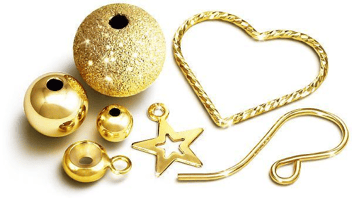
What are jewelry findings?
At JK Findings, we take pride in being one of the leading jewelry manufacturers of 1/20 14K gold filled jewelry findings. Many customers who purchase wholesale gold filled jewelry or wholesale jewelry supplies want to verify authenticity, especially given the number of unreliable products in the market today.
Testing your jewelry is a smart idea, but it’s important to understand that most testing methods are designed for solid gold, not for layered metals. Because of that, gold filled jewelry will often appear to “fail” those tests, even when it is completely authentic. Here’s why that happens and which testing methods you can actually trust.
What Is Gold Filled?
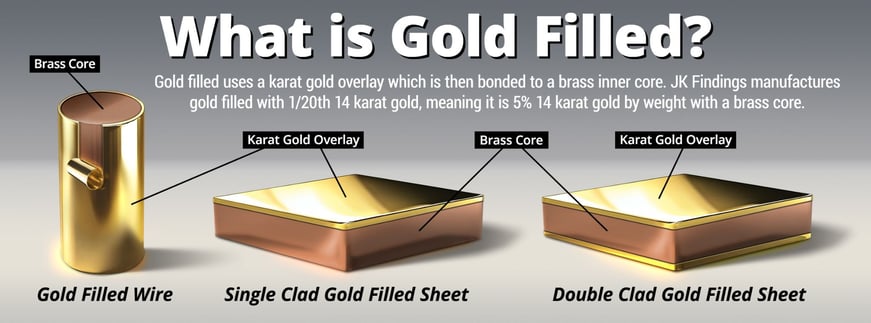
Gold filled metal is created by mechanically bonding a thick layer of solid karat gold to a base metal core, typically brass. In 1/20 14K gold filled material, the gold layer makes up at least 5% of the total metal weight (that’s where the 1/20 ratio comes from).
This gold layer is much thicker and more durable than gold plating. The bonding process makes the gold layer permanent, resulting in gold filled findings that maintain their color and finish for many years. When properly cared for, gold filled jewelry offers the beauty and longevity of solid gold at a much lower cost, making it a top choice for wholesale jewelry suppliers and jewelry makers alike.
Why Common Testing Methods Give Misleading Results
X-ray Fluorescence (XRF) Testing
XRF testing analyzes the metal surface using X-rays. However, most XRF machines read both the outer gold layer and part of the base metal underneath. Since gold filled jewelry has a thin layer of 14K gold over brass, the reading will show an average of both materials, not pure gold.
This means that a genuine 1/20 14K gold filled product will not test as solid 14K gold. That result is correct and expected, since the gold only makes up 5% of the total weight.
Acid Testing
Acid tests are designed for solid gold, not layered materials. When you file into a gold filled finding to perform an acid test, you often cut through the gold layer into the brass core. Once the base metal is exposed, the acid reacts with it, giving a false result that may look like the item is not gold at all.
In reality, this reaction is proof that the item is gold filled and not solid gold. A gold filled jewelry finding that “fails” an acid test has simply been tested with the wrong method.
Electronic and Magnetic Testing
Electronic testers measure conductivity, and magnetic tests check for magnetic response. These are unreliable for gold filled jewelry because they cannot distinguish layered materials from solid ones. They often give inconsistent readings that do not reflect the real structure of gold filled metal.
Reliable Ways to Confirm Authentic Gold Filled Jewelry
Hallmark Verification and Supplier Certification
For a non-destructive way to verify authenticity, always check the hallmarks and manufacturer information. Genuine gold filled findings are typically marked with “1/20 14K GF” or a similar stamp that identifies both the gold content and construction.
At JK Findings, nearly all our products carry these marks. As trusted jewelry manufacturers of wholesale gold filled jewelry, we also provide full certification and documentation to confirm that our materials meet strict quality standards. Buying from reputable suppliers is the simplest and most reliable way to ensure authenticity.

Fire Assay (Destructive Test)
Fire assay is the most accurate method for determining gold content, but it is a destructive process. The metal is melted and chemically analyzed to separate and measure the gold. This method is used in laboratories, not for finished jewelry, but it confirms the precise composition of the metal.
Cross-Section Analysis (Destructive Test)
In this method, the jewelry is cut and polished so that the gold layer can be examined under a microscope or scanning electron microscope (SEM). This reveals the thickness of the gold layer and confirms that it is properly bonded to the base metal. Like fire assay, it destroys the item, so it’s generally used for research or quality control testing by jewelry manufacturers.
The Key Takeaway
Gold filled jewelry should not pass tests meant for solid gold. That is not a sign of low quality; it’s a reflection of how the material is made. Gold filled metal is layered, not solid, and it will behave differently under testing.
When you purchase 1/20 14K gold filled findings from JK Findings, you can trust that every piece meets strict quality standards and contains the correct amount of gold. The best verification method is to rely on proper hallmarks, certifications, and reputable wholesale jewelry suppliers who stand behind their products.
If you have questions about how to test or verify your gold filled jewelry findings, our team is always happy to help.
-1.png?height=200&name=Untitled%20design%20(3)-1.png)